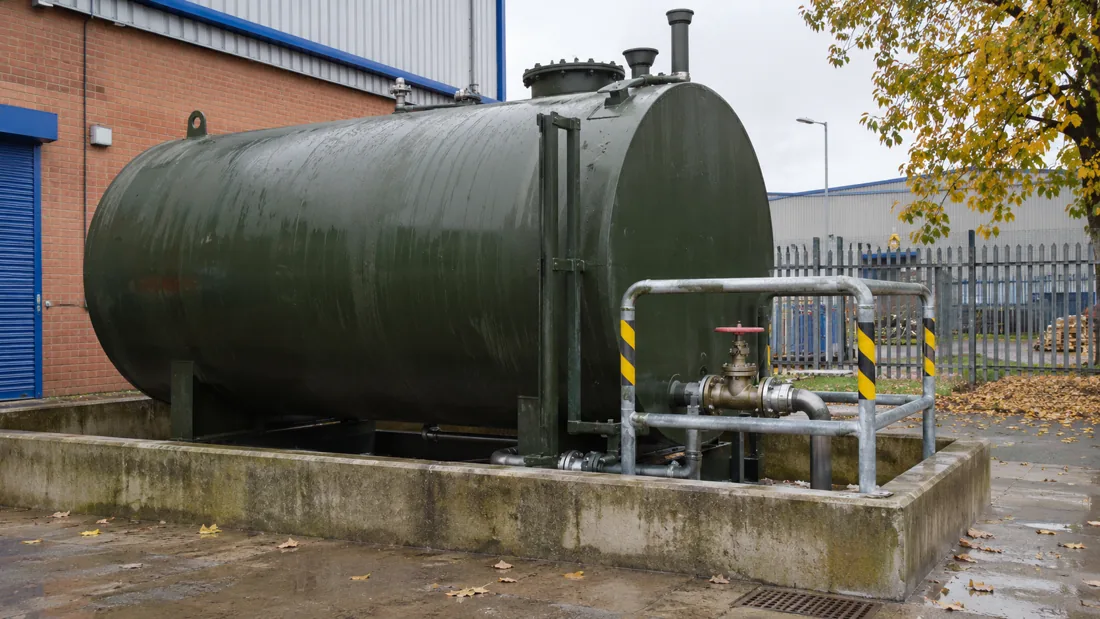
Define What Out Of Service Means
Tank decommissioning in Birmingham is the controlled closure of a fuel storage system. It may precede physical removal, or it may form part of an assessed proposal to leave a tank in place. Switching off the equipment it supplies does not resolve residual fuel, connections, vapour or the future status of the vessel.
Start with the reason for closure. A lease handback, building conversion, replacement heating system and redevelopment scheme can each demand a different outcome. Tell us whether the tank must disappear, remain accessible for inspection or be permanently closed beneath an area that will change use.
Temporary Disuse Or Permanent Closure?
The practical decision is whether the installation has a defined future use. If reuse is genuinely planned, the owner needs a maintenance and monitoring arrangement suited to that condition. An indefinite pause with no responsible person or fuel management plan should not be mistaken for completed decommissioning.
For permanent closure, compare removal with leaving the vessel in place through an appropriate assessed method. The balance includes access, ground disturbance, adjacent structures and future redevelopment. Foam filling is a separate option to investigate for suitable cases, rather than a default answer for every tank.
Where ownership is changing, agree who accepts the final condition and keeps the records. A contractor can complete the specified work while a purchaser or landlord still needs additional evidence. Establish those requirements before the project is priced, especially if a property transaction depends on completion.
Trace The System Beyond The Vessel
A fuel tank is connected to more than the pipe visible beside it. Drawings and a walkover may identify fill lines, vents, transfer pumps, return lines, day tanks and redundant branches. Explain what each connected item serves, including shared equipment outside the immediate tank area.
Isolation responsibilities need to be allocated to competent people. The decommissioning scope should describe the intended boundaries of work and the condition of disconnected lines and fittings. It should also explain whether redundant pipework is removed, retained or treated through a separate method.
Do not infer that a buried line has gone because the above-ground tank has been removed. Record retained components on a marked plan. This avoids confusion for later excavations, fit-outs and utility works, when the people who knew the old installation may no longer be available.
Resolve Remaining Fuel And Residue
The quantity and condition of remaining fuel influence both the programme and the waste route. Provide the latest available level information, previous product types and any history of water ingress or contamination. Unknown contents should be described as unknown, rather than guessed from a faded label.
The agreed method can separate recoverable product from residues that need disposal. If fuel is going to another tank, identify that destination and whether assessment or filtration is required. If it is leaving as waste, the classification and receiving facility must be suitable for that material.
Cleaning and atmosphere assessment follow the proposed next activity. A tank prepared for removal may need different controls from one being retained, and hot work introduces further requirements. Never regard time since last use, an open lid or lack of visible liquid as evidence that the atmosphere is safe.
Underground Tanks Need A Wider Plan
For buried installations, consider nearby foundations, drains, utilities and the future surface use before deciding the closure method. Available historic plans are useful, but their accuracy needs checking. A small surface cover does not reveal the size, orientation or condition of the tank beneath it.
Environment Agency underground tank guidance addresses permanent closure, including removal and appropriate filling. Use it alongside a site-specific assessment. For permanent retention underground, the Environment Agency must be satisfied there is no risk of soil or groundwater pollution. Include that requirement in the closure planning.
Closing the tank is not proof that historic ground contamination is absent. Evidence of leakage, unexplained fuel loss or stained ground may justify separate environmental investigation. Tell us what is already known so the closure work can be coordinated with the project’s environmental adviser rather than concealing an unresolved issue.
Price The End State And Record It
A useful quotation defines the tank and connected assets, fuel handling, cleaning, closure method and waste route. Access restrictions, buried services, excavation, testing and reinstatement change the work involved. The cost of a simple accessible closure cannot be used as a reliable guide for an unknown buried installation.
Agree a completion record identifying location, former contents, work undertaken, retained components and any limitations. Keep relevant waste records and method-specific certificates with it. Not every decommissioning job involves hot work, so an identical certificate list for all sites would be misleading.
Photograph accessible conditions before and after work where appropriate, and update the asset register. If a tank remains in the ground, preserve its position and treatment in the building or land records. The handover should help a future contractor understand what exists, not merely state that a visit took place.
Tank Decommissioning: Questions
Is An Empty Tank Decommissioned?
An empty tank is not necessarily decommissioned. Liquid and residue may remain below the outlet, and connected lines or vapours may still present risks. Decommissioning needs an agreed scope for isolation, contents, cleaning and the final status of the installation, followed by a record identifying what was completed and what remains.
Can A Decommissioned Tank Stay Underground?
A decommissioned underground tank can only be considered for retention through a suitable site-specific closure plan. Access, surrounding structures, environmental risks and future ground use all matter. If retention is proposed, the method and location need recording, and it should not be presented as evidence that surrounding ground is free from contamination.