Investigate The Fuel You Already Hold
Fuel polishing in Birmingham is a treatment to consider for stored fuel that may be recoverable. It circulates fuel through suitable filtration and water separation equipment to address contamination. The purpose is to improve the condition of usable stock, rather than assume every tank requires a complete disposal and refill.
It is particularly relevant to a fuel management discussion where stock turns over slowly or a system has a history of water and sediment. A standby generator can have fuel sitting for long periods, but low use alone does not establish what treatment is needed. Evidence from the tank and equipment should guide the decision.
Match Treatment To The Actual Problem
Use the location and type of contamination as your decision guide. Suspended particles and free water in otherwise suitable fuel may support a polishing proposal. Heavy settled sludge, deposits on tank surfaces or restricted access to contaminated compartments may point towards tank cleaning as well.
Polishing cannot reverse every form of chemical deterioration, repair a defective tank or establish that an incorrect product is suitable for an engine. If there is uncertainty about product identity or condition, discuss sampling and laboratory analysis before committing to treatment. Tell us what the equipment manufacturer requires.
Repeated filter blockage is worth investigating, but it can arise from more than one cause. Share service reports rather than assuming microbial contamination from the symptom alone. If a treatment additive is proposed, its suitability and use need to be agreed for the fuel and equipment instead of being added speculatively.
Define The Scope Of Sampling And Results
Existing sample reports, their dates and sampling points help establish what is already known. A sample taken from one location may not describe fuel at the bottom of the tank or behind internal divisions. The sampling proposal should reflect the question being answered, such as water content, contamination or suitability for continued use.
Standard visual checks are different from laboratory analysis. Clear-looking fuel does not by itself prove compliance with a fuel specification or the absence of all contamination. If a written quality report is needed for an audit, warranty or maintenance decision, include that requirement in the enquiry.
Agree the acceptance criteria and who interprets the results before work begins. A report should identify the tank and sample context so it can be linked to the asset record. Avoid comparing an old sample and a new result without understanding whether they represent the same fuel and location.
Access And Operational Planning
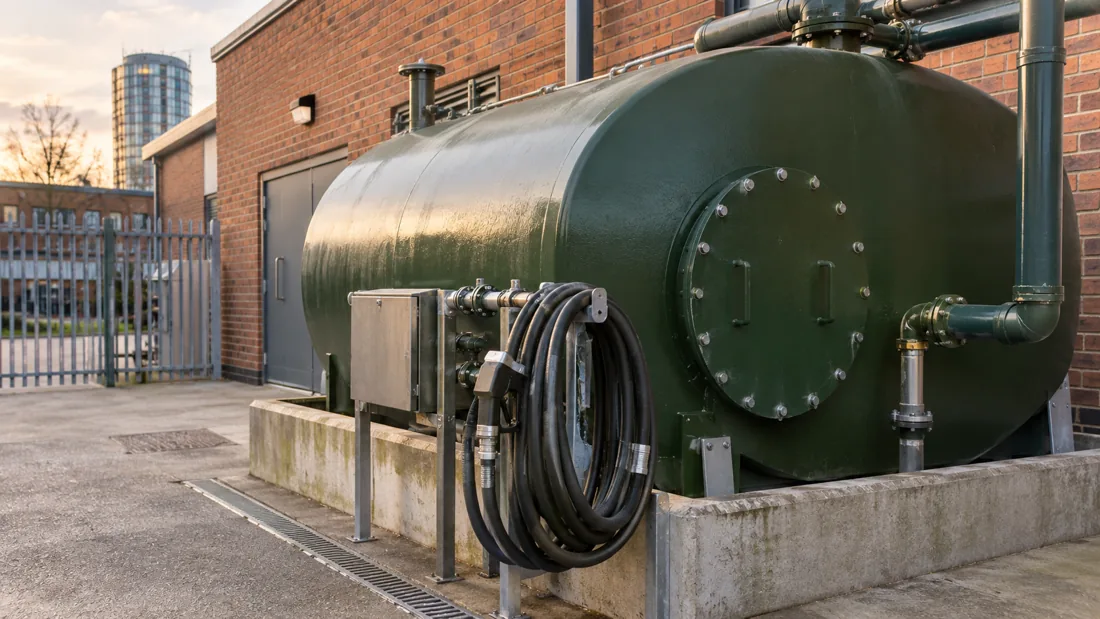
Send the tank capacity, approximate fuel volume, stored product and the system it supplies. Photographs of accessible connections, the tank exterior and possible equipment standing space help assess the arrangement. Note any known internal baffles, compartments or previous cleaning limitations.
The amount of fuel in the tank affects circulation and the practical treatment method. Ask whether the proposed arrangement can reach the relevant low points and how separated waste will be collected. There is no useful universal promise about a fixed number of passes or a standard completion time for all tanks.
Tell us if the generator, dispenser or other equipment must remain available during the work. Continuity should be agreed with the relevant maintenance manager. Do not assume treatment can take place during operation simply because the fuel is staying on site, and do not change fuel-system connections yourself.
Remove The Cause As Well As The Symptoms
A treatment plan should consider how water or dirt entered the system. Accessible fittings, fill arrangements and maintenance history can help focus a separate inspection. If an ingress route remains, fresh fuel or polished stock can become contaminated again.
Tank-floor deposits can require a clean rather than repeated polishing attempts. Our commercial tank cleaning guide explains the distinction between treating fuel and cleaning the vessel. Where both are proposed, ask how recovered fuel will be held and protected while the tank is prepared.
After treatment, agree a review plan based on the asset’s use and risk. Useful measures may include future sampling, filter checks through the maintenance contractor and attention to water entry. A calendar date chosen without reference to consumption or tank condition is less useful than a plan tied to actual findings.
What Influences Cost And Paperwork
The price depends on fuel volume, contamination, access, treatment method and any need for separate tank cleaning. Laboratory testing, temporary storage and disposal of separated water or residue can be distinct items. The initial information should make clear which evidence and services are included in the proposed price.
Ask for a work record identifying the tank, treatment performed and observations made. Laboratory results should be provided where specifically commissioned, rather than being implied by a general statement that fuel was polished. Keep those records with the equipment maintenance history so future changes in condition can be understood.
Separated residues need appropriate classification and a suitable waste route. The paperwork will reflect the materials removed rather than treating the entire fuel volume as waste by default. If the fuel is found unsuitable for recovery, agree the disposal and replacement decision before additional work is authorised.
Fuel Polishing: Questions
Does Polishing Mean All The Diesel Is Usable?
Fuel polishing does not automatically make all diesel usable. It treats particular contaminants, while product identity, chemical condition and equipment requirements still matter. If suitability is uncertain or a specification must be demonstrated, agree laboratory analysis and acceptance criteria. A visual check after treatment is different from a fuel quality test.
Will Fuel Polishing Remove Tank Floor Sludge?
Fuel polishing may not remove settled tank floor sludge or deposits on internal surfaces. The accessible connections and tank layout affect what can be reached. Where deposits remain a contamination source, tank cleaning may be needed alongside fuel treatment. Describe any previous findings and send existing inspection or sampling reports when you enquire.